BULLETIN 25th September 2026
 
Rotary speakers September the 22nd 2026
 
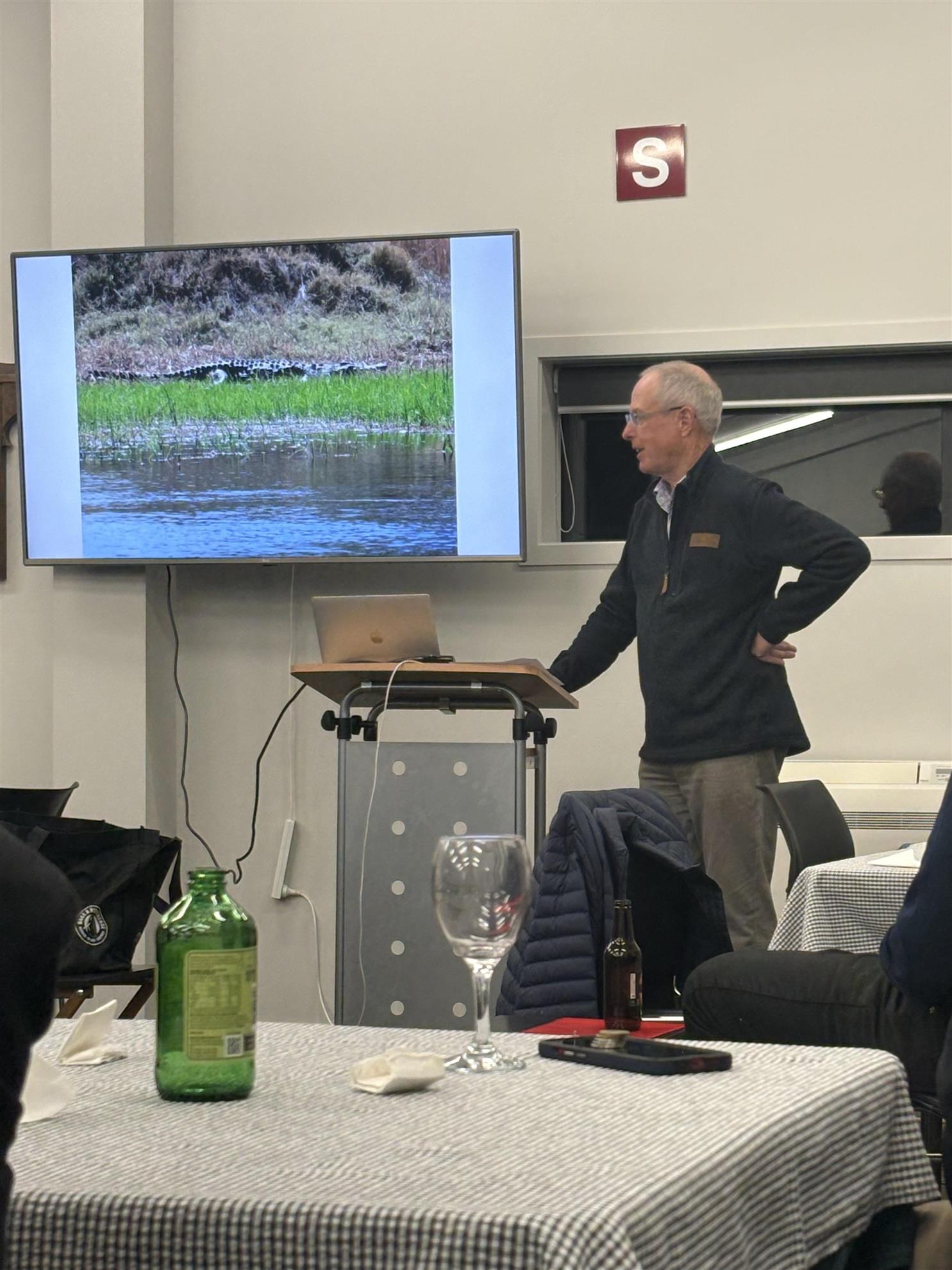
Tim and Chris Whitaker
 
Overlanding Namibia & Botswana (from the internet)
 
Overlanding through Namibia and Botswana is one of the world's premier self-drive adventures, combining Namibia's vast desert expanses with Botswana's raw, untamed wetlands and game reserves. Because these regions feature highly remote environments, distinct driving conditions, and cross-border logistics, thorough preparation is vital.
Vehicle & Equipment Requirements
  • A true 4x4 is essential: While high-clearance SUVs can manage Namibia's primary gravel routes, a robust 4x4 with a low-range gearbox (like a Toyota Hilux or Land Cruiser) is mandatory for Botswana’s deep sand, thick mud, and river crossings.
  • Tyre management: Tyre punctures are highly common. Carry at least two spare tyres, a pressure gauge, and a reliable air compressor to deflate tyres for sand traction and reinflate them for gravel.
  • Dual-battery system: Essential for running a 12V camping fridge/freezer to keep food fresh in extreme desert heat.
  • Self-sufficiency spares: Carry a high-lift jack, a sand shovel, recovery tracks (tracks or max-trax), and a heavy-duty tow rope.
 Driving Rules & Logistics
  • Never drive at night: Wildlife (including elephants) and livestock frequently roam onto unlit roads. Aim to reach your campsite before sunset.
  • The Golden Fuel Rule: Fill up your fuel tank at every single opportunity, even if it is half full. Service stations can be hundreds of kilometres apart or occasionally out of fuel. Carry extra fuel in jerry cans if traversing deep park tracks.
  • Gravel and sand dynamics: Keep your speed under 80 km/h on gravel to avoid losing traction. Keep your headlights turned on at all times in Namibia to increase your visibility through flying dust.
  • Don't trust GPS time estimates: Online maps frequently underestimate travel times on corrugated gravel or deep sand tracks. Budget significantly more time than calculated.
 Border Crossing & Paperwork
  • Cross-border authority: If renting, you must obtain a Letter of Authorization (circulation permit) from your vehicle rental company stating you have permission to cross into Botswana.
  • Cash for border fees: Always keep cash handy (local currency or USD/ZAR) to pay for road taxes, carbon taxes, and insurance permits at the border gates.
  • Veterinary fences: Botswana has strict veterinary control checkpoints to stop the spread of foot-and-mouth disease. You are not allowed to bring raw red meat or certain fresh produce from Namibia into Botswana (or across specific internal fences from north to south). Plan your grocery shopping accordingly to avoid having food confiscated.
 Comparison of Terrains & Planning Needs. The overlanding environment transitions sharply between the two nations:
Feature
Overlanding in Namibia
Overlanding in Botswana
Primary Terrain
Vast gravel roads, rocky mountain passes, massive sand dunes.
Deep sand tracks, salt pans, seasonal water channels.
Driving Style
Long, scenic stretches; high focus on gravel road stability.
Technical off-roading; constant monitoring of tyre pressure and water depths.
Campsite Booking
Highly recommended to book ahead, especially inside Etosha National Park or near Sossusvlei.
Must be booked months in advance. National park campsites are unfenced and strictly limited.
Water & Supplies
Widely available in main hubs, but carry a backup 5–10L canister.
Completely self-sufficient camping. Bring all your own water, firewood, and food into game parks.
 Navigation & Emergency Preparation
  • Offline Mapping: Download comprehensive offline maps via apps like Tracks4Africa or pre-load offline Google Maps. Cell service drops entirely once you exit primary towns.
  • Satellite communication: For deep-wilderness sections like Khaudum National Park or the Central Kalahari, carry a satellite messenger (like a Garmin inReach) or a satellite phone.
  • Water supply: Always keep a minimum of 20 litres of emergency drinking water secured in your vehicle.
Rotary speaker September the 8th 2026
Liona Stanicich
 
Rotary Youth Drivers Awareness Programme
 
Liona came from Christchurch to thank us for supporting the programme and to tell us about it. Forty people are killed or injured each day on our roads. This programme introduced in 2007 is to help teens improve their driving skills. The 1-day course helps Year 12 and up to look at behaviour change with 6 interactive sessions, to date 69,631 teens, 219 schools and 221 workshops have taken place.
 
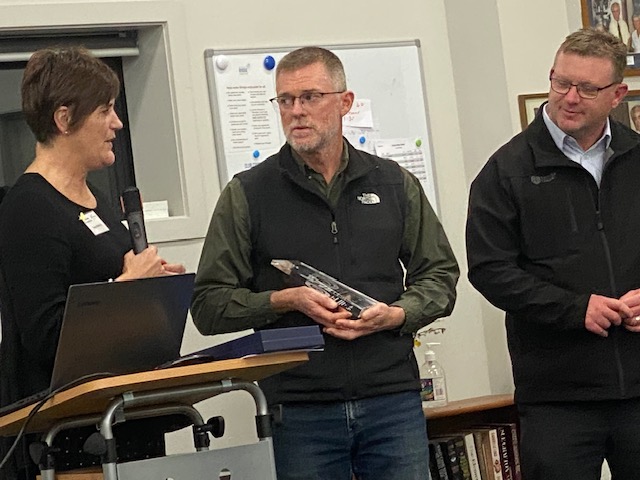
It costs $75 per person but sponsorship especially from Rotary and Toyota has lowered the cost. It is the only road safety programme in NZ. Liona nominated Rhys Jenkins for all his help with this programme for the Supporting Excellence Award for NZ and Rhys won it. The trophy was presented by Mark from Toyota.

Barry Hambleton
 
Rotary Youth Driver Awareness program (RYDA) [from the internet]
 
Liona Stanicich is the South Island Programme Coordinator for the Rotary Youth Driver Awareness (RYDA) road safety education program, where she organizes and leads workshops teaching high school students how to make low-risk decisions on the road.
 
Role and Program Details:
 
South Island Coordinator: Liona manages and runs dozens of RYDA workshops across regions like Otago, Canterbury, and Southland during the school terms.
 
Core Message: The program focuses on empowering teenagers to develop low-risk driving strategies, manage driver distractions, and recognize hazards.
 
Community Engagement: Liona regularly speaks at local groups, such as the Rotary Club of Alexandra (on Tuesday the 8th of September 2026), to discuss youth road safety initiatives and the impact of driver awareness training.
RYDA is designed specifically for 16–18-year-olds as many begin learning to drive.
 
The programme focuses not just on vehicle control, but on decision-making, risk awareness and the cognitive distractions that contribute to crashes. Across the event, students rotate through six interactive 30‑minute sessions, covering topics such as peer pressure, cognitive awareness, speed and stopping distances, and live driving demonstrations.
 
Liona highlighted why this approach is so effective:
 
Teens learn by repetition, so exposing them to a programme like this creates awareness around cognitive distractions, Liona said. “That message then gets reinforced again later when they’re learning to drive and sitting their licences.”
 
The programme is intentionally hands-on. Students work through booklets, quizzes and group activities, with prizes adding an extra layer of engagement. The interactive format encourages discussion, reflection and participation, ensuring the messages stay with students long after the sessions have finished.
 
‘My Life, My Choices’, is woven through every session, reinforcing the idea that everyday decisions can have lifelong consequences. Strong community involvement as well is the key to the success of the programme.
 
A driver instructor programme is also held for parents, offering practical guidance and confidence to those teaching their teenagers to drive and reinforcing safer habits at home.
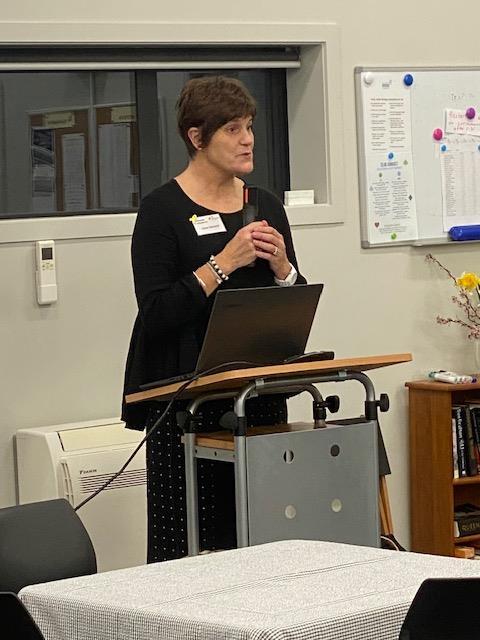
Liona Stanicich (picture courtesy Barry Hambleton)
Rhys Jenkins is presented with the Supporting Excellence Award associated with Road Safety, by Mark from Toyota (picture courtesy Barry Hambleton)


Bulletin Editor
Gil Elliott
Speakers
Sep 22, 2026
Overlanding Namibia & Botswana
Oct 13, 2026
Spirit of Adventure
Oct 27, 2026
Nov 10, 2026
View entire list
Club Information
Alexandra
The Magic of Rotary
Tuesdays at 5:45 PM
Alexandra Bridge Club
52 Boundary Road
Alexandra,  9320
New Zealand
Currently meeting on the second and fourth Tuesday of the month
District Site Icon
District Site
Venue Map
Venue Map
President Paddy Ford


If you are unable to do a duty that you have been listed for below, then please find a replacement for yourself. If you are Sergeant, you can contact the editor for a replacement name and then contact that club member. 
Meeting Responsibilities
Pre Meeting Tasks 13th October 2026
 
Cashier
Rutherford, Ian
 
Attendance
Sharland, Bidi
 
During Meeting Tasks 13th October 2026
 
Set up/bar/kitchen duties/tidy up after
Sumser, Phil
 
Set up/bar/kitchen duties/tidy up after
Wham, Murray
 
Set up/bar/kitchen duties/tidy up after
Whybrow, Jonny
 
Introduce and Thank Speaker
Beattie, Stuart
 
3 Minute Talk
Clark, Judy
 
Sergeant
Roy, Rob
 
Meet & Greet and Last Word
Dawson, Bob
 
Pre Meeting Tasks 27th October 2026
 
Cashier
Sharland, Bidi
 
Attendance
Sumser, Phil
 
During Meeting Tasks 27th October 2026
 
Set up/bar/kitchen duties/tidy up ...
Wham, Murray
 
Set up/bar/kitchen duties/tidy up ...
Whybrow, Jonny
 
Set up/bar/kitchen duties/tidy up ...
Beattie, Stuart
 
Introduce and Thank Speaker
Clark, Judy
 
3 Minute Talk
Dawson, Bob
 
Sergeant
Grubb, Nev
 
Meet & Greet and Last Word
Dymock, Peter
 
Daffodil Day 28 August 2026 
 
Convenor, Bernie Lepper
 
The 28th of August this year was The Cancer Society Daffodil Day.
 
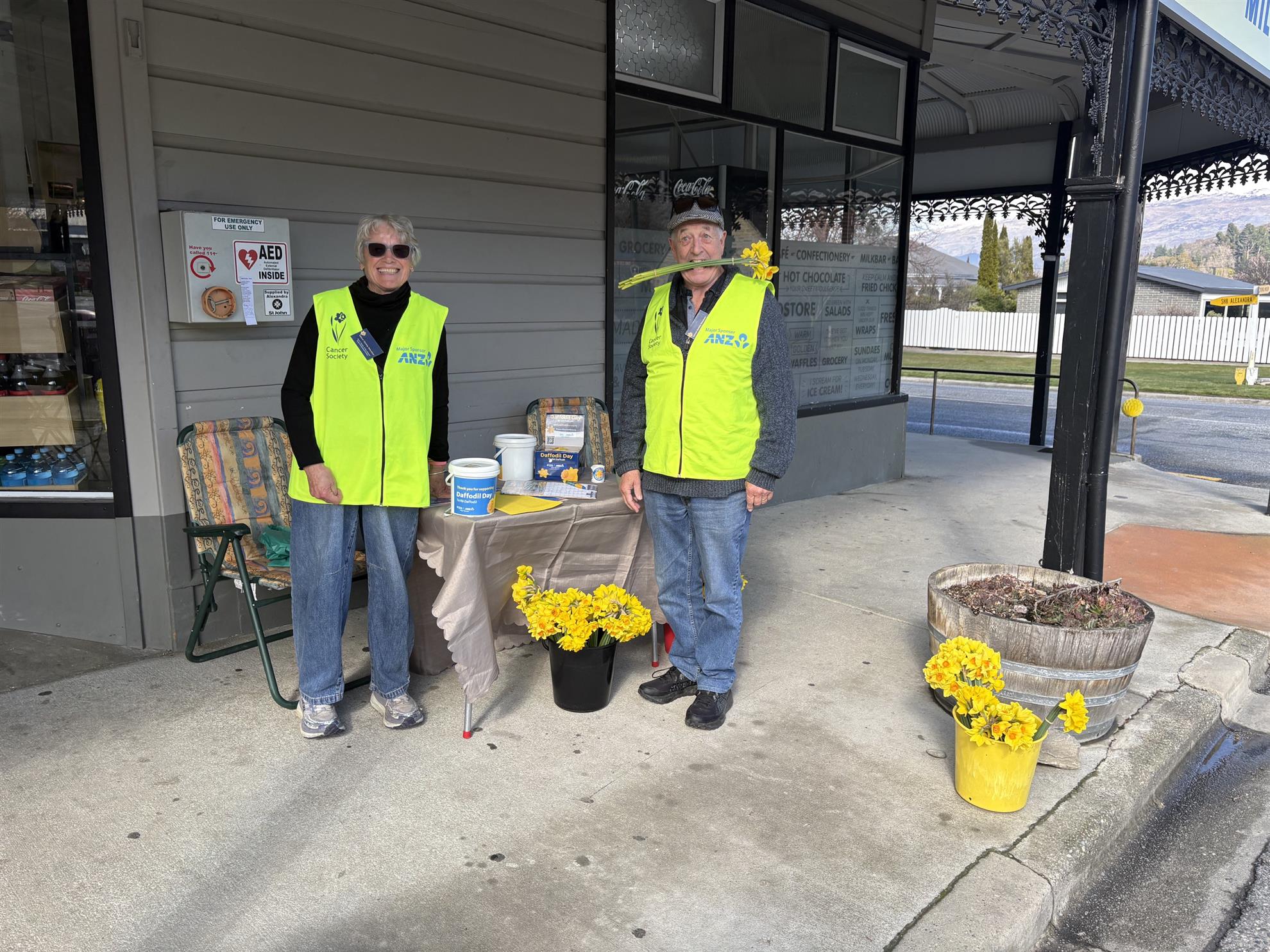
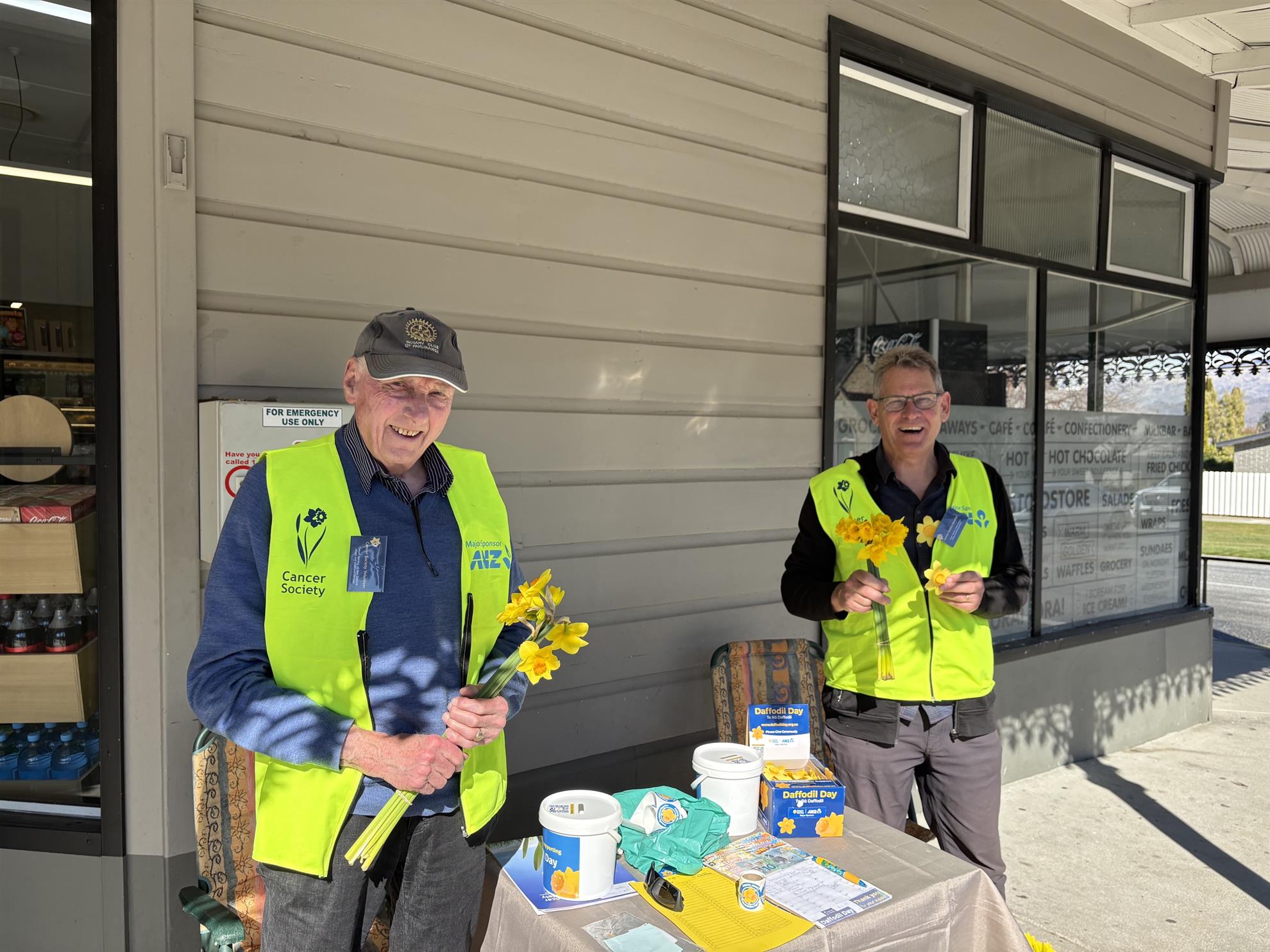
In 2025, Alexandra Rotary volunteered as collectors at The Night n Day store in Clyde. This was repeated this year and the collection took place from 9am to 4pm with volunteers changing over every two hours. As previously, daffodils were given out to the public for their monetary donation. It was by all accounts a very successful day. (see pictures).
 
And from the Internet:
 
Each day eighty-one Kiwis hear the words, “you have cancer.” Daffodil Day is a chance to show your friends and family affected by cancer they’re not alone.

Daffodil Day is Cancer Society’s most iconic and much-loved fundraising campaign.
 
It is the generosity of New Zealanders on Daffodil Day that help cancer patients and their families (whānau) get the care and practical support they need; from crucial help getting to treatment via our free driving service, through to specialist nursing and psychology support, and accommodation for those needing life-saving treatment far from home.
 
Daffodil Day is also about donating in order to protect future generations of New Zealanders by helping to fund world-leading cancer research and vital prevention programmes.
Bernie and Paddy collecting at the Night n Day store Clyde
Steve Robertson
 
Firewood splitting
 
Keep Thursday the 8th of October 2026 free for our fire wood splitting morning starting at 9am. Community garden, Dunstan Road (next to the Fulton Hogan yard).
 
Steve to confirm this!
 
Steve
 
 
Pictures below, courtesy of Barry Hambleton
Large logs to start with
Then to the wood splitter teams
Great, now time for a break.
Morning tea.
Rotary International Theme for 2026/2027
The next Bulletin will be produced on Friday the 30th of October 2026. Please send articles and any photographs to the Editor (gil.elliott42@gmail.com) by Thursday the 29th of October 2026 at the latest, thank you.